Land Grading and Site Preparation in Cleveland, TN: What to Expect Before Breaking Ground
Before a single wall goes up, before utilities are stubbed in, before a foundation is poured, the land itself has to be prepared. Land grading and site preparation are the unglamorous but absolutely critical first steps of any construction project, and when they are done correctly, every phase that follows becomes easier, faster, and less expensive. When they are done incorrectly, the problems that result can haunt a project for years. In Cleveland, TN, where site topography can vary dramatically from one parcel to the next, understanding what proper land grading and site preparation involves is essential for any developer, builder, or property owner planning a construction project.
At Caldwell Design and Engineering, site grading design is one of our most frequently requested services. We have prepared grading plans for residential lots, commercial pads, roadway projects, and multi-lot subdivisions throughout the greater Cleveland, TN and Chattanooga region. In this article, we will walk you through what land grading and site preparation actually involve, why engineering oversight matters, and what you should expect from the process from start to finish.
1. What Land Grading and Site Preparation Actually Involve
Land grading refers to the process of reshaping the natural topography of a site to create a stable, properly draining surface suitable for construction. This is not simply pushing dirt around. Proper grading requires a carefully engineered plan that balances cut and fill quantities, establishes positive drainage away from structures, controls erosion during and after grading activities, and ensures that the finished grades meet both functional and regulatory requirements.
Site preparation goes hand in hand with grading and encompasses the full range of work needed to get a raw parcel ready for construction. This typically includes clearing and grubbing to remove vegetation and root systems, topsoil stripping and stockpiling, rough grading to establish the general landform, subgrade preparation for roads and building pads, and installation of erosion and sediment controls to protect the site during active earthwork. On more complex sites it may also include rock removal, fill placement and compaction, and slope stabilization work.
In the Cleveland, TN area, many sites come with significant topographic relief. Hillside lots, sites with multiple drainage features, and parcels with varying soil conditions all require more sophisticated grading design than a flat, uniform site. At Caldwell Design and Engineering, we account for all of these variables in our grading plans to ensure that the finished site functions as intended and meets the standards required by local and state reviewing agencies.

Have you ever noticed a new home that sits with water draining toward the foundation rather than away from it? That is a grading failure, and it typically results from inadequate engineering at the design stage or poor execution during construction. Getting the grades right on paper and verifying them in the field is the only reliable way to prevent it.
2. The Engineering Behind a Grading Plan
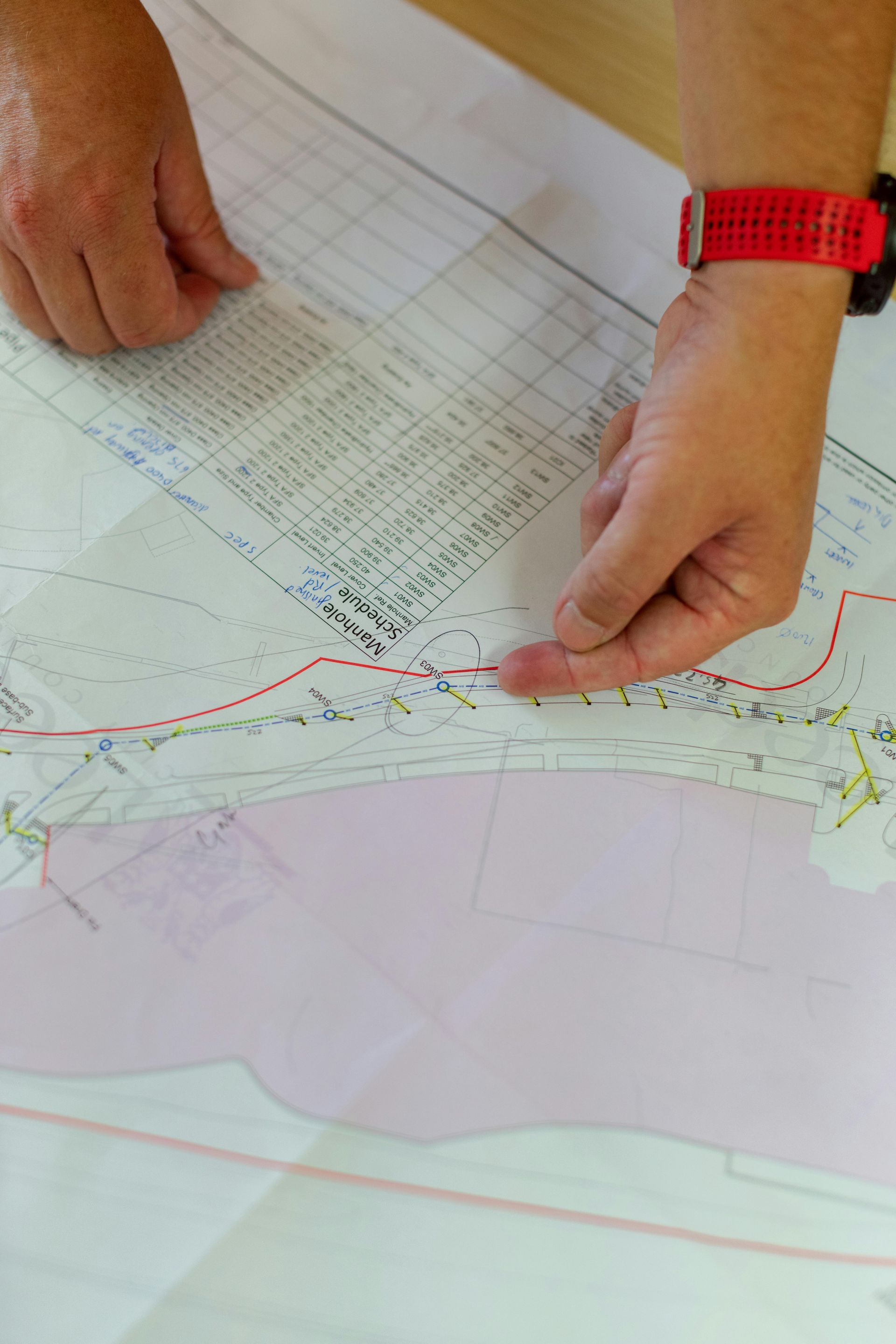
A professionally engineered grading plan is far more than a drawing showing where dirt needs to move. It is a complete engineering document that communicates to contractors, inspectors, and reviewing agencies exactly how the site will be shaped, how drainage will be managed, and how erosion will be controlled during and after construction. Producing an accurate and code-compliant grading plan requires a licensed civil engineer with experience in site design and a thorough understanding of local requirements.
The grading plan begins with an accurate topographic survey of the existing site. This survey establishes the existing elevations across the property and provides the baseline from which all proposed grading is designed. Without accurate survey data, a grading plan is essentially a guess, and any contractor working from inaccurate baseline data is likely to encounter costly surprises during construction.
From the survey data, we develop proposed finished grades that accomplish several goals simultaneously. The building pad or home site must be elevated above the surrounding terrain or drainage features to ensure positive drainage away from the structure. Driveways, parking areas, and access roads must be graded to appropriate slopes for safe, functional use. Drainage swales and channels must be designed to efficiently convey runoff to approved discharge points without eroding or causing ponding. And all of this must be accomplished while minimizing the amount of earthwork required, which directly affects cost.
A well-designed grading plan also includes a cut-and-fill balance analysis, which estimates how much material needs to be removed from high areas and how much fill will be needed in low areas. Achieving a good cut-fill balance reduces the cost of importing or exporting material from the site, which can be one of the largest line items in a site preparation budget. Our goal is always to design grading that works efficiently with what is already on the site.
3. Why Proper Site Preparation Sets Up Every Phase of Your Project for Success
The quality of site preparation work has a direct and measurable impact on every construction phase that follows. A building pad that is properly compacted and graded to the correct elevation provides a stable foundation for concrete work and structural construction. A site where drainage is properly managed from day one experiences far fewer weather delays during construction and far fewer warranty callbacks after the project is complete. Roads and parking areas built on properly prepared subgrades last longer and require less maintenance over time.
Contractors and builders who work from engineered grading plans also operate with much greater confidence and efficiency. They know exactly what the design intent is, they have a clear set of finished grade targets to work toward, and they have documentation they can reference when questions arise in the field. This reduces change orders, reduces conflicts between trades, and keeps the project moving on schedule.
For projects in Cleveland, TN that require permits from the City of Cleveland, Bradley County, or the Tennessee Department of Environment and Conservation, a professionally engineered grading plan is typically required as part of the permit application. Submitting a complete, accurate grading plan from a licensed engineer streamlines the review process and demonstrates to reviewing agencies that the project meets applicable standards. Trying to move forward with grading without an approved plan is a common source of stop-work orders and costly delays.
Conclusion
Land grading and site preparation in Cleveland, TN require careful engineering, local site knowledge, and precise execution. Whether you are preparing a single residential lot or a multi-acre development site, investing in a professionally designed grading plan from the start pays dividends across every phase of the project. The right grades, the right drainage, and the right compaction make everything that follows easier and more reliable.
Planning a project that requires land grading and site preparation in Cleveland, TN? Contact Caldwell Design and Engineering today to discuss your project and get started on a grading plan that sets your build up for success from day one.
Blog